Some business expenditures are for high-cost items that will be useful to the business for many years to come. Those items are categorized as “fixed assets” and their expense is recognized gradually over the span of their lifetime.
The process of recognizing an item’s expense over its useful life is called “depreciation” (or “amortization” for intangible goods like patents). This process follows the Matching Principle, which states that expenses should be recognized in the same time period as their corresponding benefits. Since the asset will provide benefit over its lifespan, the expense should be recognized over its lifespan as well.
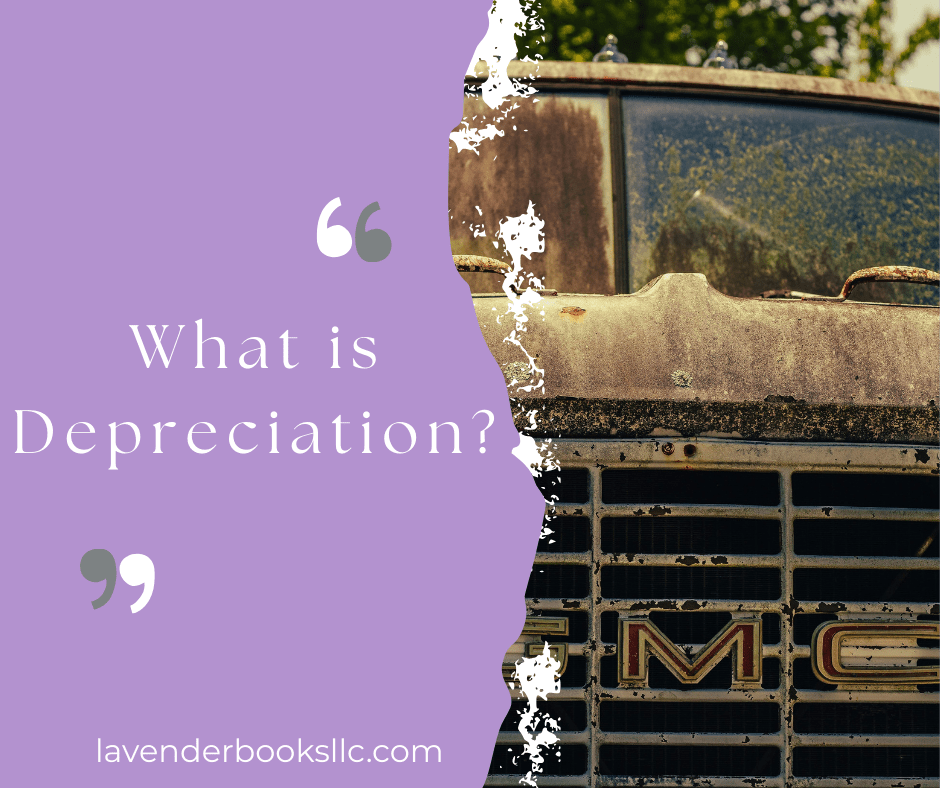
There are many ways to depreciate a fixed asset. The simplest is straight line depreciation. Say a work truck cost a business $20,000 and it’s expected to last 5 years, then $4,000 of its expense would be recognized as depreciation in the books each year.
Some other depreciation methods argue that an asset will be most useful in the early years of its use, and so depreciate the item much faster up front. It is also possible to depreciate a vehicle based on the estimated mileage that is used each year.
Whatever method is chosen, the boil down is the same: Depreciation allows a company to recognize large assets gradually, spreading the expense over a longer period of time.
 Lavender Books
Leave a comment